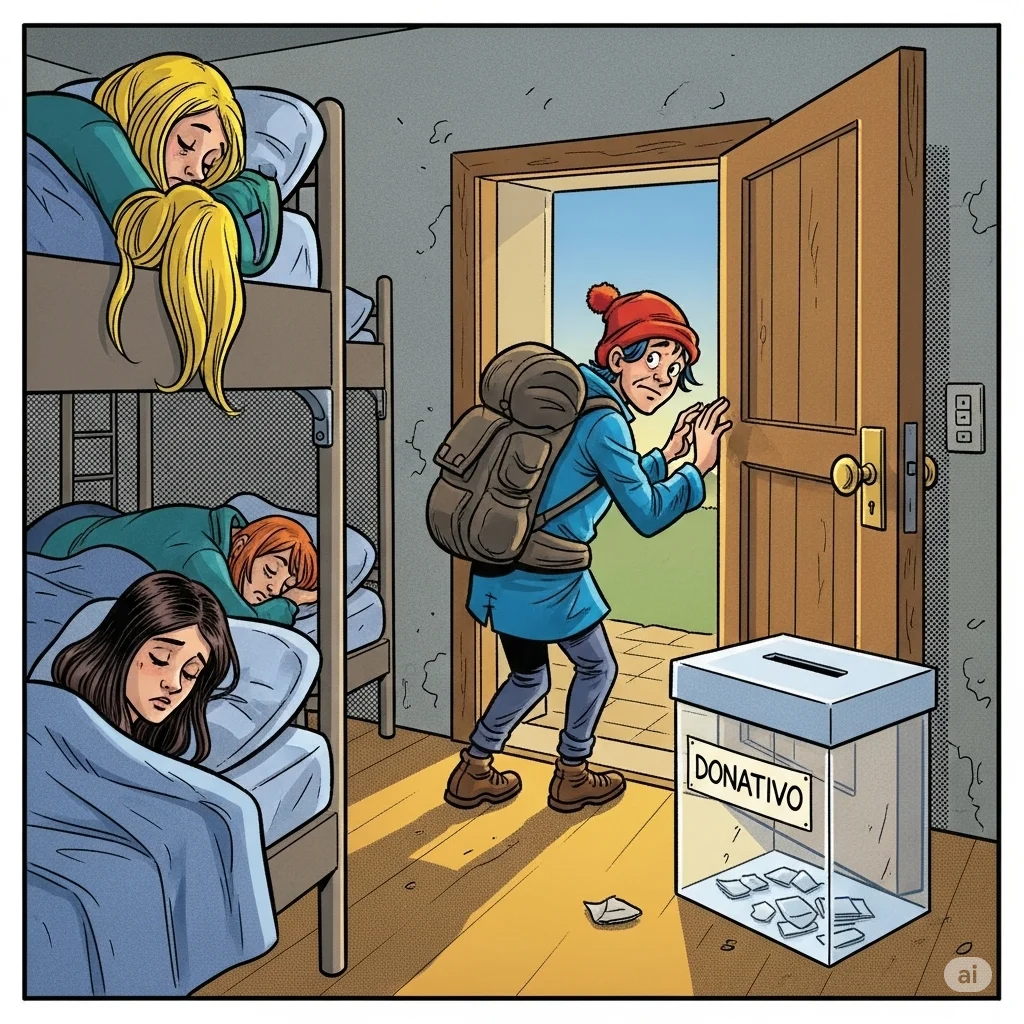
The Mystery of the “Ghost Pilgrim of the Donation”: Jacobean Mysticism or Pocket Contortionism?
Ah, the donation shelter! That oasis of peace and coexistence on the Camino de Santiago, where generosity is the currency and trust is the air you breathe. Or that's what one hopes. Because in this microworld of backpacks, blisters and socks drying in the sun, there exists a subspecies of pilgrim as enigmatic as the Jacobean legends: the Ghost Pilgrim of the Donation.
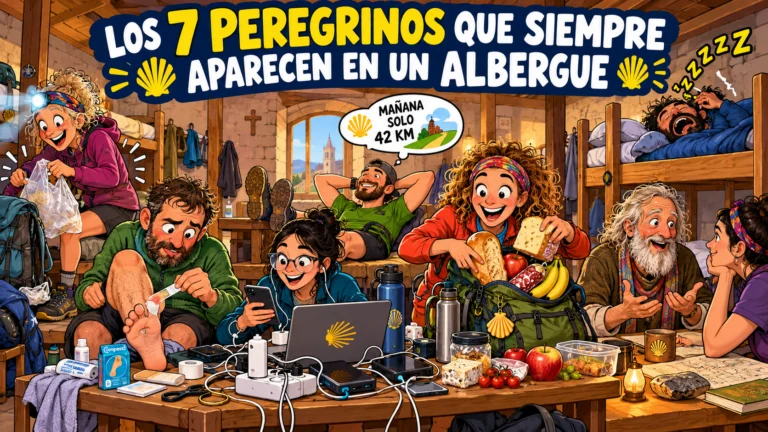
He arrives tired, yes, like everyone. He occupies his bunk, stretches his muscles, and showers with that enthusiasm that only gives you knowing that the water is hot (miracle!). Participate in the community dinner, laugh at the anecdotes, share a wine of dubious origin and, perhaps, even give you a foot massage with that miraculous cream that only he has. He is the life of the party, the perfect companion.
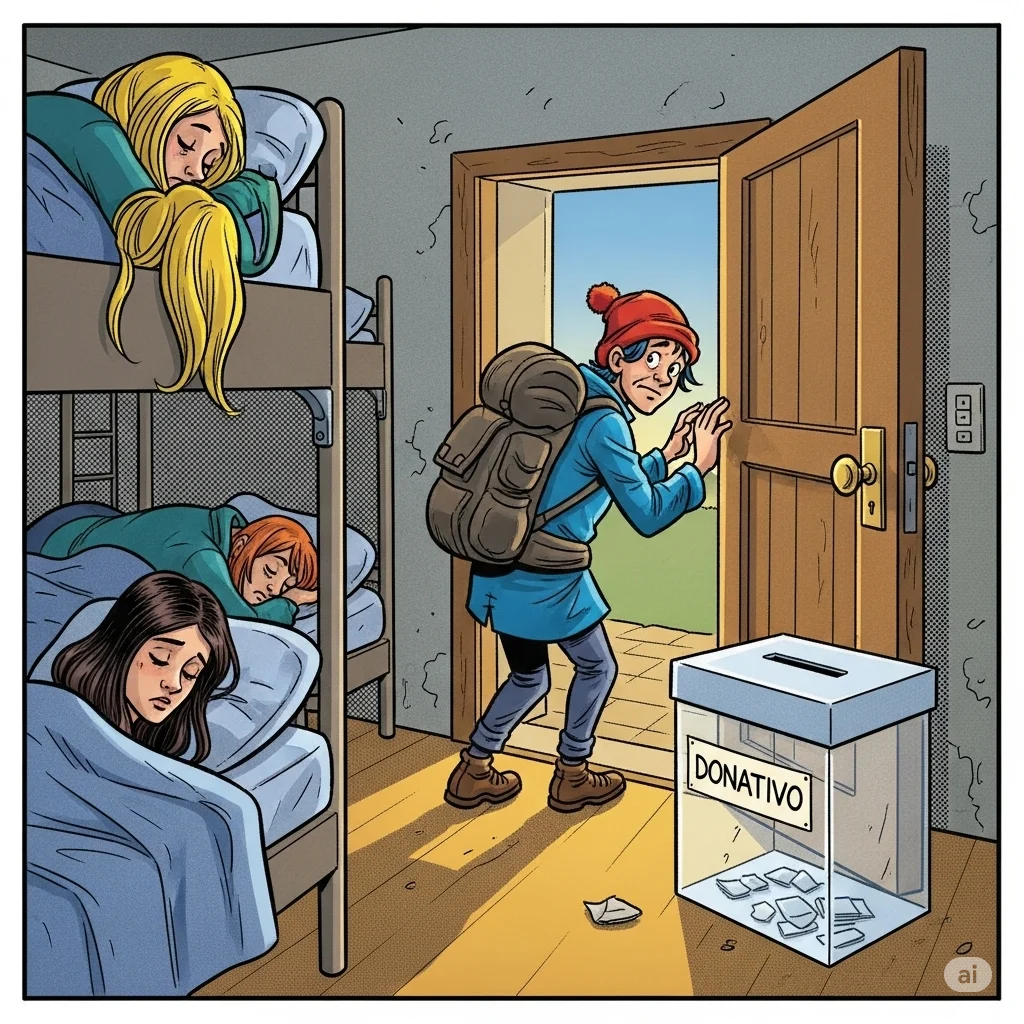
But at dawn, when the first rooster dares to brave the darkness (or when the first snorer enters REM), something magical happens. The Phantom Pilgrim of the Donation vanishes. Leaves no trace. Well, yes, sometimes a forgotten towel or a beach flip-flop that no one wants to claim. But what does not leave, what never leave it, it's... the donation!
One wonders: Is it a new form of pilgrim asceticism, a test of material detachment? Or do they think that the hostel runs on mystical solar energy and the sweat of the hospitaleros? The donation box, which at the end of the previous day looked promising, wakes up with the same amount (or less, if someone made a mistake and used it to buy a coffee).
We have seen everything:
- The "Ninja of Dawn": Able to pick up his backpack in stony silence, put on his boots without making the slightest noise and disappear before the first ray of sun hits the window. His donation is as secretive as his departure: non-existent.
- The "Empty Pocket Philosopher": He will give you an inspiring talk about the value of experience over material things, about how the true Camino is lived with the heart, not with the wallet. Your donation is, of course, that valuable life lesson.
- The "Invisible Friend": He becomes your friend the night before, asks you for help with a blister, tells you about his life. He promises that in the morning he will leave "whatever." Whatever it is turns out to be an air bubble.
- The "Pagan Pilgrim": The one who, after nights of free sleep, begins to invoke the ancient gods to justify his lack of contribution, because the “energy of the Way” is his offering!
Meanwhile, the hospitaleros, those lay saints, smile. Because they know that, for every Phantom Pilgrim of the Donation, there are ten who give with their hearts, who understand that those 5, 7 or 10 euros (or whatever each one can and feels like) not only keep the lights on and the water hot, but are the fuel for the generosity and altruism that make the Camino, precisely, the Camino.
So if you come across one of these financial spectrums, don't be offended. Just laugh. And if you are one of them… maybe the next yellow arrow will take you directly to an ATM! Or better yet, to the donation box at the next shelter, where magic, hospitality and, yes, money, continue to make this dream called Camino possible.