In the first century, first of the modern guide and of the digital map, a Bolognese priest traced his journey to Santiago de Compostela. His name was Domenico Laffi, his son and daughter were an important witness to the history of the pellegrinaggio.
Oggi il Camino de Santiago You are prepared with maps, applications, guides, forums, videos and online testimonials.
The 17th century was completely diverse.
The journey to Santiago was long, uncertain and especially difficult. The street was too peggiori, the information was not limited and the lid could be unforeseen.
In this I answer if you insert the figure of Domenico Laffi, Italian priest originally from Bologna, one of the great testimonies of the European pellegrinaggio verse Compostela.
An Italian road through Santiago
Laffi percorse più volte il Cammino di Santiago and has a detailed description of your journey.
His experience came to life in an opera published in the 17th century, in which he recounted the tragitto verse Santiago and also the fine procession to Finisterre.
Not if you were trying to say a religious text.
Laffi descriveva città, paesaggi, difficoltà del percorso, ospitalità, incontri e sensations vissute during the trip.
For this reason, this article is also considered a sort of ancient travel guide.
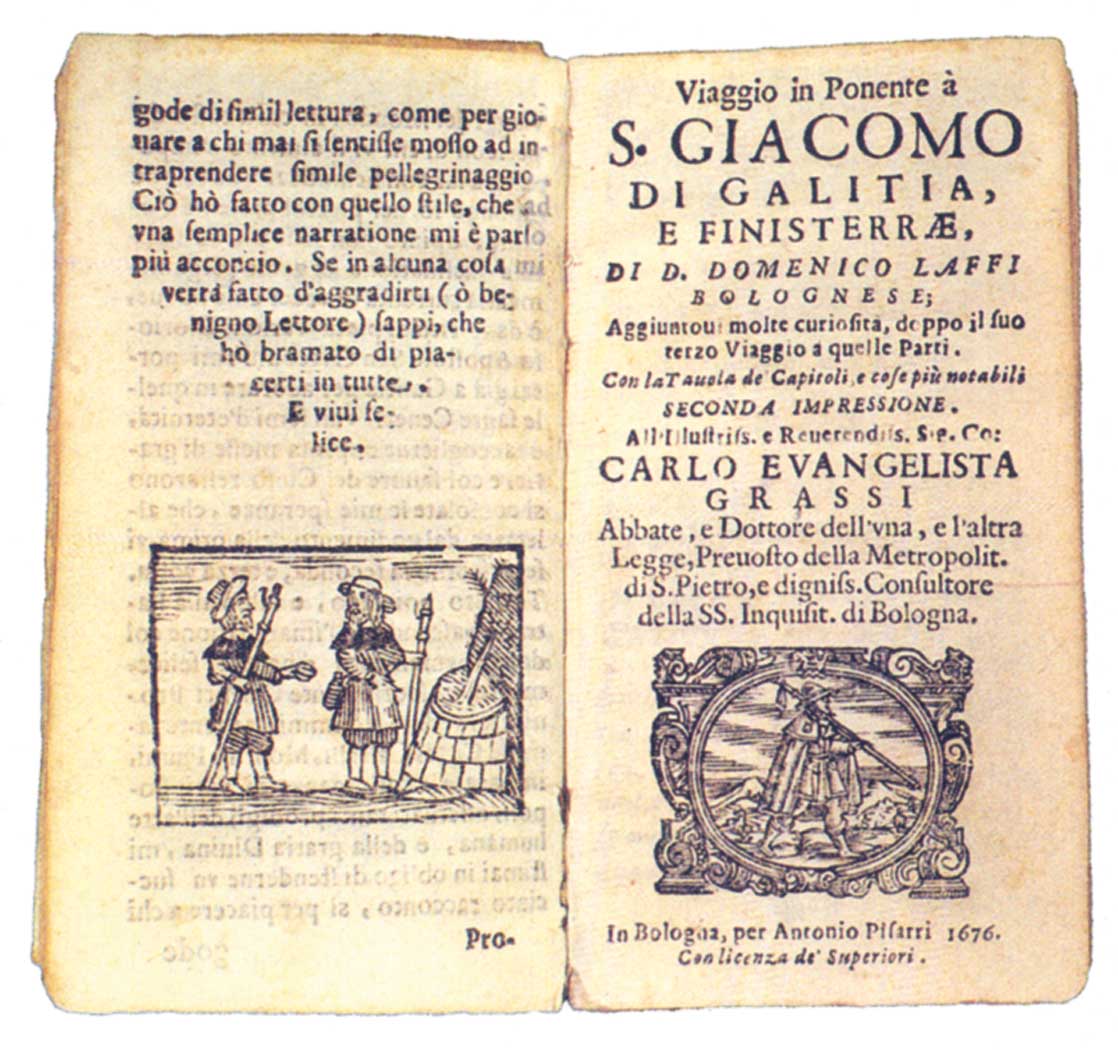
Viaggiare without modern map
To understand the importance of your story, imagine what it means to cross Europe in the 19th century.
The information available waso poche.
The street was not marked as oggi.
The distance was not difficult to calculate.
The first step is to give special experiences to other travelers, to the local community and to the indications to follow along the route.
In this scenario, the testimony of those who lived with Santiago became extremely valuable.
Laffi raccontava ciò che aveva seen, but also ciò che a future pellegrino avrebbe potentially find.
Santiago and Finisterre
One of the most interesting aspects of Domenico Laffi's journey is the fact that his itinerary does not necessarily end in Santiago.
Come altri pellegrini dell'epoca, I continued verse Finisterre.
Oggi que este tratto è conosciuto de migliaia di camminatori che, unarrivati arrivati a Compostela, decidono de continuare fino all'oceano.
In the 17th century, however, the journey has profound deep significance.
Raggiungere Finisterre will soon arrive at the western limit of the known world.
Il mare rappresentava la fine della terra, ma also a luogo de contemplazione e de symbolismo.
A detailed story
Laffi non scrisse un texto astratto.
Il suo racconto contains observations very concrete.
Describe the things you see, everyday life, the behavior of people, the difficulty of the streets and the conditions of travel.
Questi dettagli permettono oggi di capire meglio come fosse really il pellegrinaggio nei secali passedati.
Ci cordano also that the Cammino was not a romantic experience in the modern sense of the term.
It was an impegnative, long and especially unexpected journey.
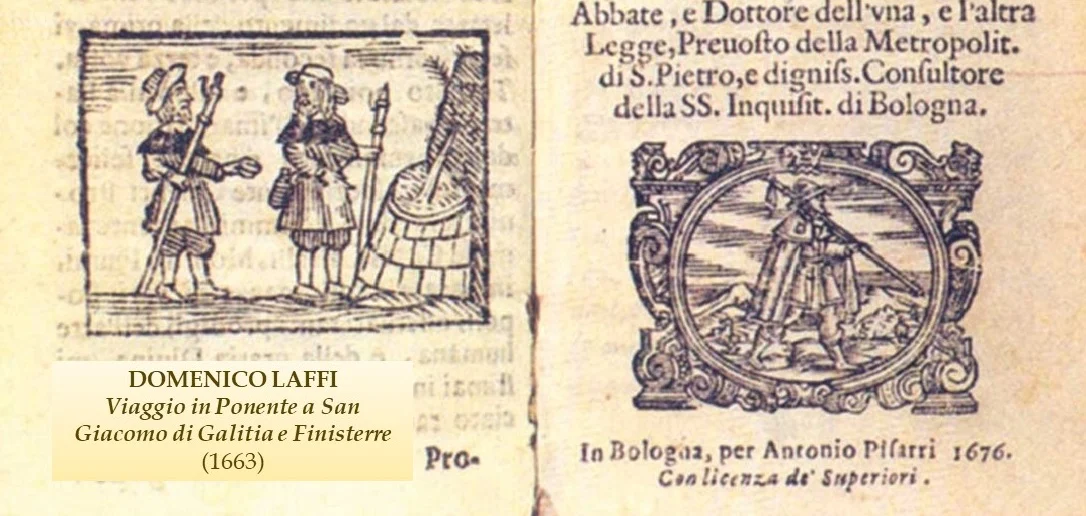
L'Italia and the Cammino di Santiago
The figure of Domenico Laffi demonstrates an anchor that the Cammino of Santiago is not an exclusively Spanish phenomenon.
Per secoli, Italian pellegrini have traversed Europe to raggiungere the tomba of the apostolo Giacomo.
Many parts of the city are very long in Spain and on weekends or months of travel.
The Italian Jacobean tradition is quindi molto ancient.
Ancora oggi esistono numerous itinerari che collegano l'Italia alle grandi vie Europeane di pellegrinaggio.
Premium of the travel blog
C'è qualcosa di surprisingly modern in the story of Domenico Laffi.
Oggi un pellegrino publishes a video, writes a blog or shares photographs sui social.
In the Sixth Century, Laffi fece qualcosa di simile con gli strumenti del suo tempo.
Racconto il viaggio.
Spiegò ciò che aveva seen.
Descrisse le difficoltà.
Condivise the experience itself with chi avrebbe voluto parte dopo di lui.
In this sense, your book may also be one of the ancient testimonies of those who have lived through the journey.
A path very diverse, but surprisingly familiar
The conditions have not changed completely.
Eppure, leaving the experience of the ancient skins, emerged when we knew ancora oggi.
Dove I sleep?
How much is left in the next city?
Which road next?
Dove find aiuto?
What pericoli will I avoid?
Sono domande universali del pellegrino.
Technology has changed the instruments, but there are always concerns.
Domenico Laffi and the memory of the Camino
His figure continues to be important because it allows us to observe the Cammino with the eyes of an Italian visible to three sectors.
We do not see both monuments and streets.
Let's see a journey full of fate, curiosità, faith and incontri umani.
Il suo racconto è una finestra aperta su un'epoca en cui arrivare a Santiago significava affrontare un'avventura que potevare mesi.
Il Cammino eats European racconto
Domenico Laffi rappresents some of the most spacious.
The Camino di Santiago is a European story built by millions of people from diverse countries.
Tedeschi, French, Italian, Portuguese and people from many other regions have contributed to creating one of the great cultural lives of the continent.
Ogni pellegrino has lasciato a piccola traccia.
Alcuni, come Laffi, have lasciato anche parole.
Ed è thanks to the parole that we can imagine how we found the Cammino when Santiago sowed much more land.
Prima delle applicazioni, prima delle guide moderne e prima dei social, c'erano già pellegrini Italiani che raccontavano la strada verso Santiago.