Less heat, less crowding, spectacular landscapes and a much calmer way of experiencing each stage. Autumn transforms the Camino de Santiago, but it also requires better preparation.
There are pilgrims who wait all year for September to arrive. They are not looking for the busiest Camino or the one with the full terraces. They look for something else: trails covered in leaves, foggy mornings, quiet towns, golden forests and that feeling of walking along a different Path.
Autumn has already begun and, for many pilgrims, it can be one of the best times of the year to do the Camino de Santiago.
It doesn't mean it's the easiest season. Nor are they all advantages. The days are getting shorter, the possibility of rain increases, some accommodations reduce services and temperatures can change a lot between morning and afternoon.
But that is precisely part of its appeal.
Less pilgrims, more Camino
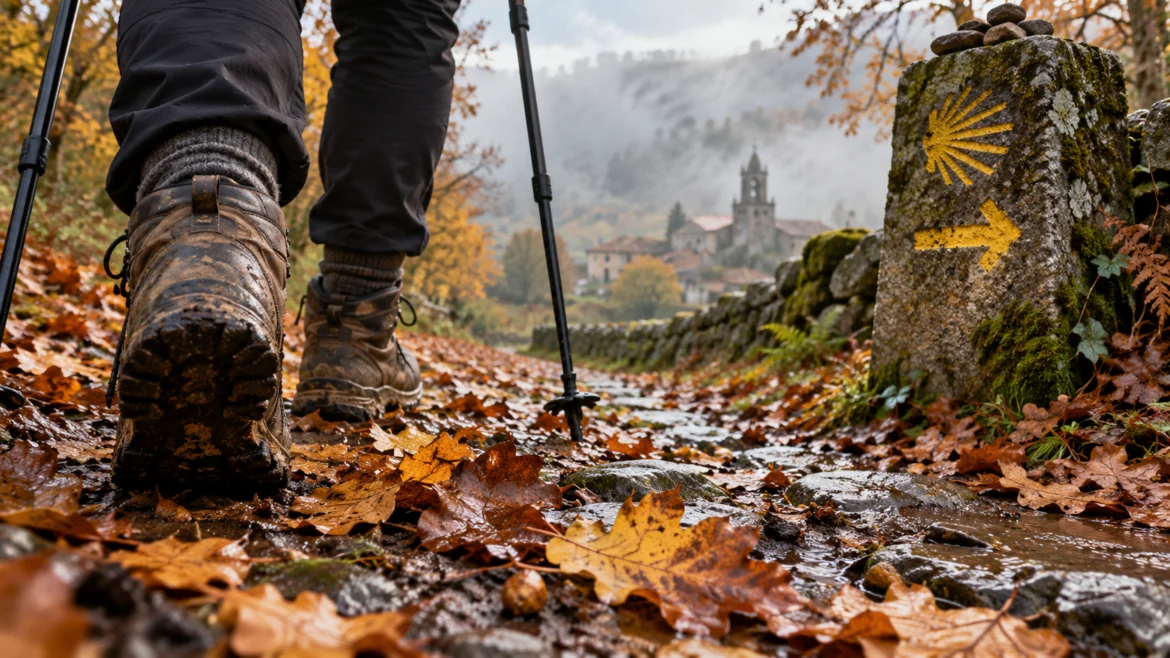
One of the big differences compared to summer is evident from the first kilometers: the number of walkers decreases.
After the months of July and August, some sections regain a tranquility that completely changes the experience.
It is easier to walk for long periods in silence, stop without haste and find towns where the passage of pilgrims is felt in a closer way.
For those looking for a less crowded experience, September and October can offer a particularly interesting balance.
There is still enough activity on many itineraries, but some of the pressure of the busiest weeks is gone.
The landscape changes every day
Autumn also has something that no application can measure: the landscape.
The forests of the Camino del Norte, Primitivo, Galicia, El Bierzo or Navarra begin to transform into a mixture of greens, yellows, oranges and ochres.
In the vineyard areas, the Camino crosses especially attractive landscapes coinciding with a time closely linked to the grape harvest and the rural world.
The first morning fogs also appear, which can completely transform places that seem familiar in summer.
The same stage traveled in August and October may seem like a different Camino.
The great enemy is no longer the heat
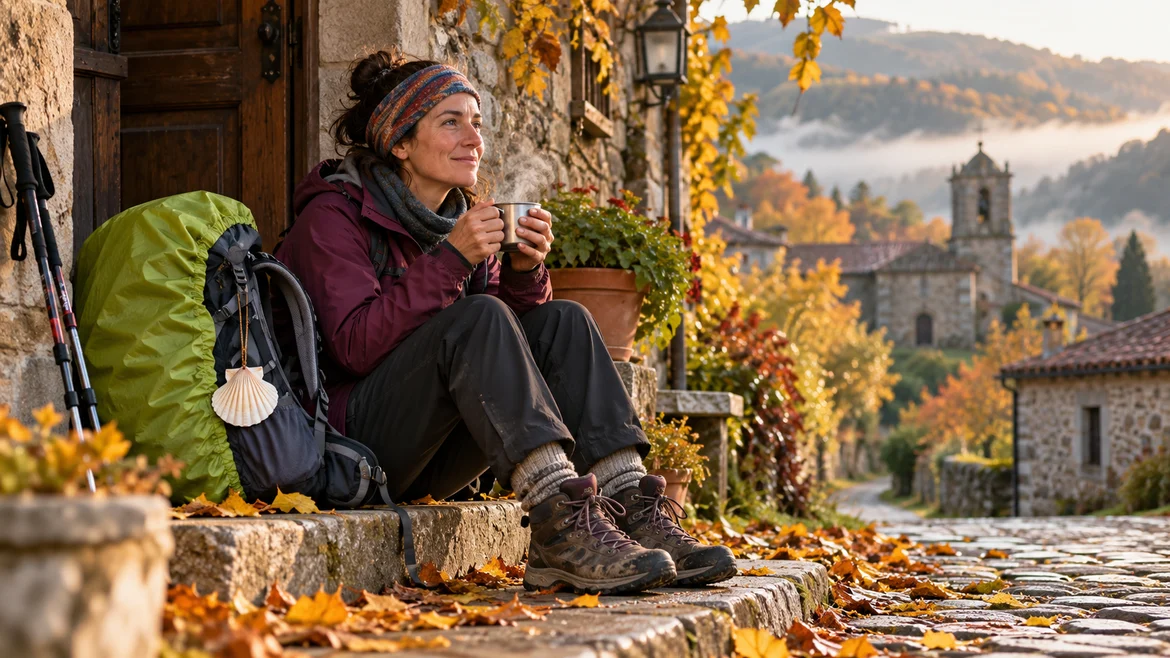
In summer, one of the main concerns is to avoid the central hours of the day.
In autumn, the problem changes.
Temperatures are usually more pleasant for walking for many hours, although significant contrasts can occur.
A cold morning can turn into a fairly mild midday and end in a cool afternoon again.
Therefore, the key is no longer to carry a large amount of clothes, but to dress in layers.
A breathable t-shirt, a light midlayer and a waterproof outer layer allow you to adapt much better to changes.
The fall backpack is not the August backpack
This is probably one of the most common mistakes.
Going out in autumn with the same preparation as in the middle of summer can end up turning a pleasant day into a rather uncomfortable experience.
Rain must enter the planning from day one.
It is not enough to carry a small raincoat “just in case.” It is advisable to have effective waterproof protection for your body and backpack.
It is also important to wear clothes that dry relatively quickly.
On certain days it can be difficult to get a wet t-shirt or socks to dry completely overnight.
And there is a simple rule worth remembering: a pilgrim wet for several hours can end up feeling cold even when the temperature does not seem particularly low.
Be careful with leaves and wet soil
Autumn also changes the terrain.
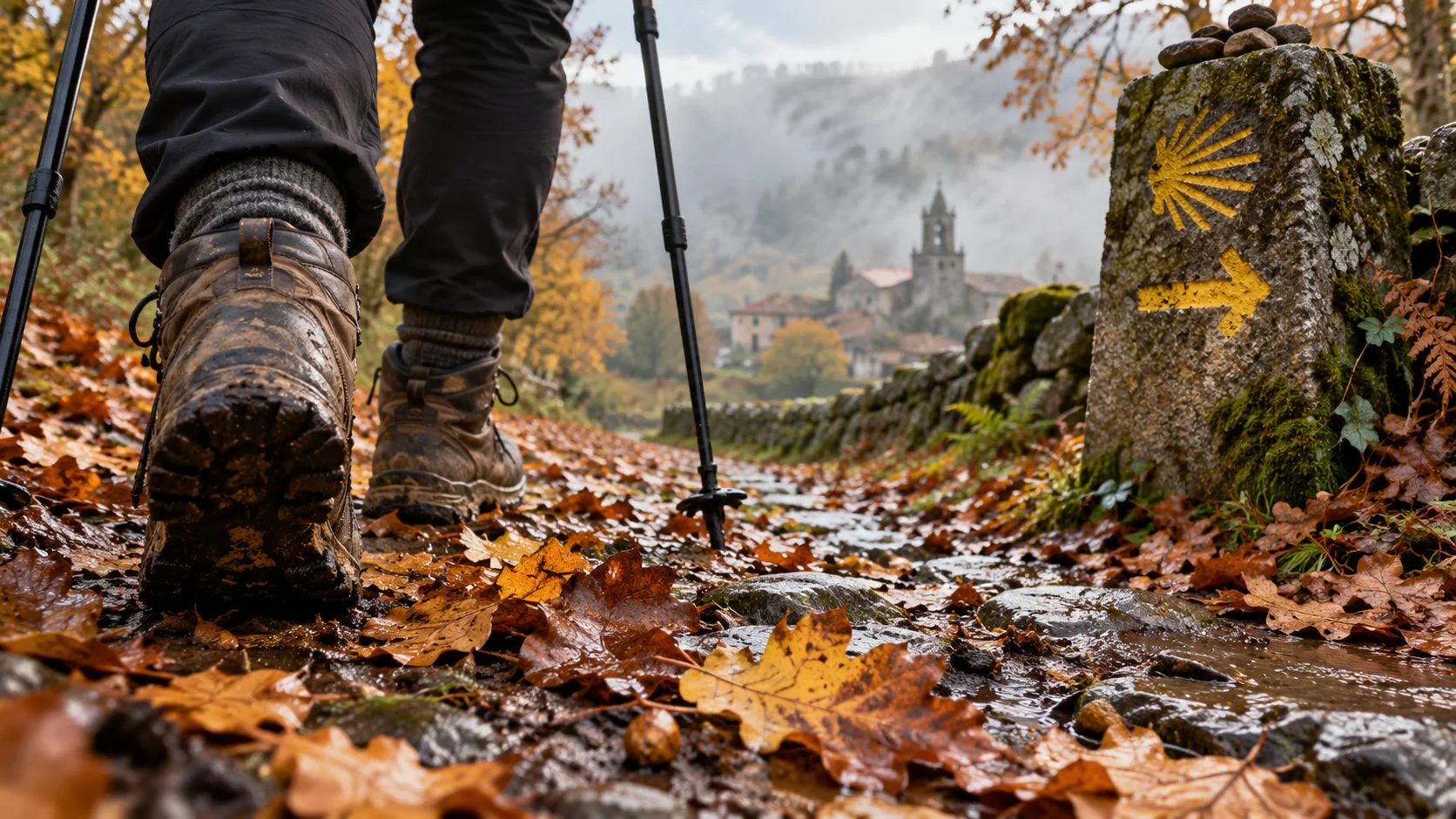
The leaves can hide stones, roots and small unevenness. If it has also rained, some dirt or stone paths can become much more slippery surfaces.
This is especially noticeable on descents and wooded areas.
Walking sticks can be very useful, even for pilgrims who do not normally use them.
Footwear also becomes even more important. It's not just about being waterproof. It should offer good support and a sole capable of responding well on wet terrain.
It dawns later and gets dark earlier
Another important change compared to summer is the light.
In autumn the days begin to shorten noticeably.
The pilgrim who usually walks for many hours should keep this in mind when planning the stages.
It is not worth turning the last kilometers of the day into a race against the darkness.
A slightly shorter stage can allow you to enjoy the route much more.
Additionally, carrying a small headlamp can be very useful for early departures, cloudy days or unexpected arrivals in the late afternoon.
Hostels also change pace
This point should be especially kept in mind.
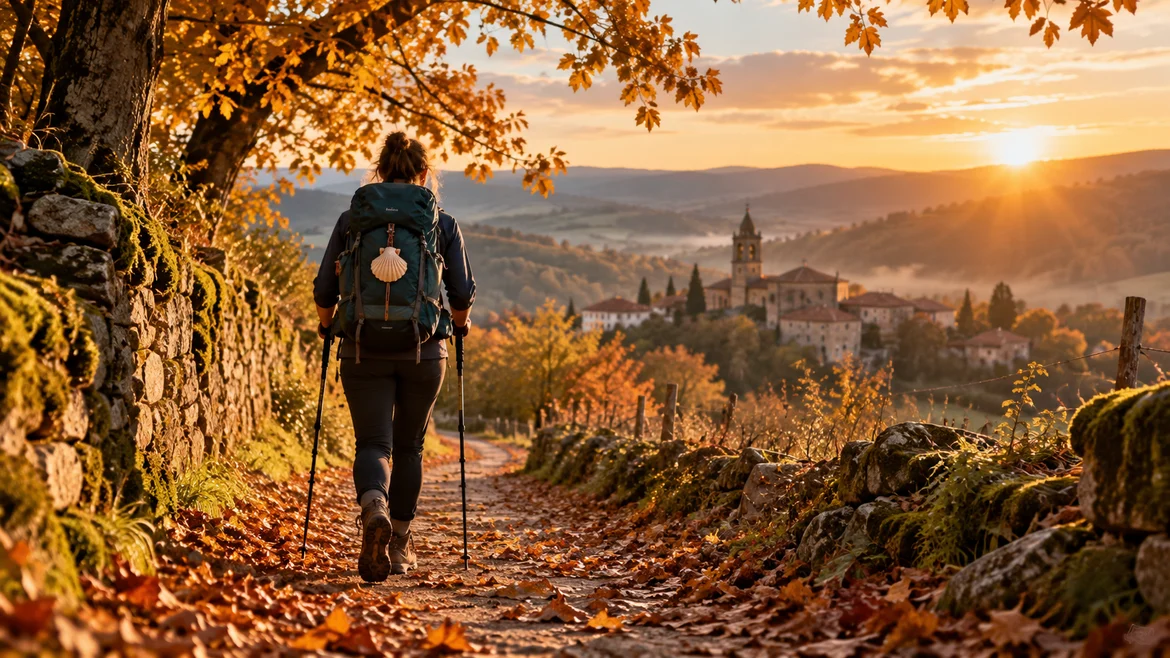
When the high season ends, some accommodations reduce their hours and others may close temporarily.
In the main centers of the Camino there will normally continue to be an offer, but in small towns it is not advisable to assume that all summer services continue to be available.
A prior call or consultation can save many additional kilometers.
In autumn there is also an advantage: the pressure to find a bed usually decreases.
This allows us to recover a certain improvisation that during some periods of the summer is much more complicated.
The Camino recovers part of its silence
This is probably the big difference.
Autumn has another speed.
The terraces empty sooner. The towns recover their daily lives. The roads have long stretches where you can barely hear anything other than boots, the wind or the water.
For many pilgrims, that environment allows for a more introspective experience.
It doesn't mean it's better than the Summer Trail. It's just different.
And for those looking to walk calmly, stopping to observe the landscape and experiencing encounters in a less hurried way, it can be especially attractive.
Five things that should not be missing
The preparation does not need to turn into a mountain expedition either.
For most hikes, there are a few items that are particularly useful: good waterproof protection, layered clothing, spare socks, a headlamp and a daily check of the weather forecast and available accommodation.
To that we would add something that weighs very little: flexibility.
In the fall there may be days when it is smart to shorten a stage, wait out a storm, or modify your planning slightly.
The Camino will still be there the next day.
Is it really the best time?
There is no perfect season for everyone.
Those looking for many hours of daylight, open services practically everywhere and a very social atmosphere will probably enjoy other times more.
But for the pilgrim who wants generally milder temperatures, fewer crowds and one of the most spectacular landscapes of the year, autumn has arguments that are difficult to beat.
In addition, it allows you to discover something that is sometimes hidden during the busiest months.
The Camino does not need to be full to feel alive.
Sometimes a path covered in leaves, a church appearing in the fog and another pilgrim who passes you and simply says:
Good Way.